We need to talk about Xero
By Damon Anderson, 3 September 2026. 11 minute read.
Faithful are the wounds of a friend; profuse are the kisses of an enemy.
I had this week's news stories written.
Then Tuesday happened, and a Xero own goal lit up my LinkedIn feed.
The topic? You guessed it. AI in accounting software.
Drop what you're doing. Breaking news, for all the wrong reasons.
Here is what it buried. Accrual agreed to buy Puzzle, so the AI-native ledger category has started consolidating about eighteen months after it started existing. Airwallex is rolling out a product that runs a company's entire finance function with four AI agents and no finance team. And a US advisory firm began offering external quality assessments performed mostly by AI agents, which is to say that agents have arrived inside assurance work.
Any one of those tells you more about where this profession is going than anything that happened on my feed this week.
Before I go any further, a disclaimer. I spent five years at Xero, three of them leading the accountant and bookkeeper business unit in the UK. I also spoke to Kate Hayward, Xero's UK Managing Director, before publishing this, and her response is at the end.
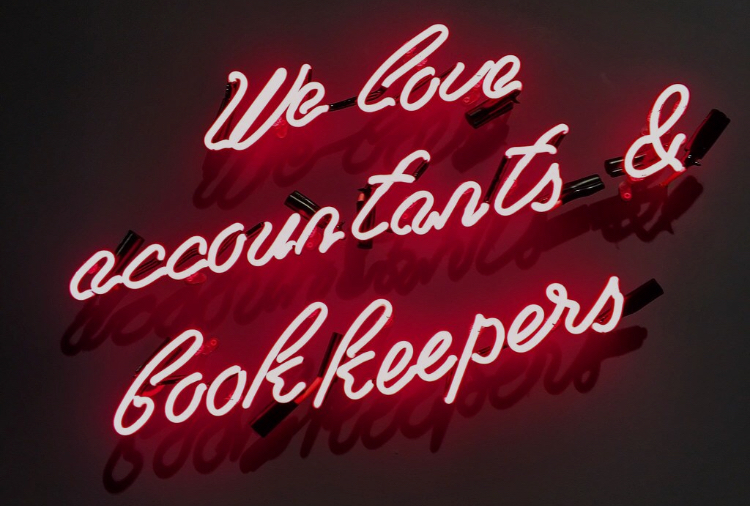
Proudly hung on the wall at Xero's UK HQ in Milton Keynes. Photograph by the author, 2018.
What happened
A paid influencer post went out tagged AD, #xero and #xeropartner. Six years, roughly £120,000 spent on accountants and £10,000 on software. Then Xero connected to Claude, a full management accounts pack in an afternoon, replacing something that used to cost £800 a month. Get 90% off Xero for six months.
It was one of several ads running that day.
By Wednesday morning it was the only thing on my LinkedIn timeline, and everybody else's. Kate Hayward, Xero's UK Managing Director, responded publicly within hours: "That ad does not reflect our values or our direction, and it should never have run. I'm sorry." The ads came down. A review process is going in. That is a fast, personal apology from a named executive inside a day.
However it didn't really settle anything, because there are two stories here and the advert is only where they collided.
The first story: a company drifting
Goodwill towards Xero has been draining for two or three years, slowly and then all at once.
Four price rises. Plan changes that pushed businesses into higher tiers. Satisfaction scores going the wrong way. A share price that has more than halved. A shareholder revolt over executive pay. And underneath it, particularly on this side of the world, a suspicion that the attention has moved to America and the markets that made Xero are now being managed rather than built for.
The word people keep reaching for is corporate. Not broken. Not failing. Corporate. A company that used to feel like it was building something with you now feels like it is running a set of plays at you.
Then an advert, paid for by Xero, telling small businesses that the people who put them on Xero are an £800 a month line item they can delete.
We have been here before, and it was our old friend Intuit. QuickBooks Live sold bookkeeping directly to the businesses its own ProAdvisors served. The town halls were brutal. Why are you doing this to us. And underneath the anger was something worse than commercial threat: the feeling that a software company had decided you were a glorified calculator, and that it had a bigger calculator than you.
By Wednesday, longstanding loyalty t-shirt wearing Xero partners were announcing they were leaving. Laura McKenzie, who advocated for Xero for years and was never paid to, ended her partnership publicly and said the ad was the last item on a longer list.
That is the part worth taking seriously. People who sold Xero for a decade, for free, are stopping.
The second story: nobody is where the narrative says they are
The bigger story has nothing to do with Xero.
There is a version of this profession, loud and highly visible, where AI has already changed everything. Automated bank reconciliation, multi-entity packs assembled in an afternoon, capacity released that would have taken three hires to buy. That is not marketing. I see it every week and it is absolutely real. It is also a small fraction of firms.
Then there is everybody else, which is still nearly everybody. Firms where AI is a subscription nobody uses, where the partners are exhausted by the noise, and where a good, competent, profitable practice is told weekly that it is about to be obsolete, and cannot see anything in its own working week that resembles the story being told about it.
Here is what makes the week faintly absurd.
For every dollar the world spends on software, it spends roughly six on services, and the smart money has noticed. General Catalyst has expanded its Creation Fund to $1.5bn to buy professional services firms outright and rebuild them around AI. Thrive Holdings, in which OpenAI holds equity, has raised $2bn at a $12bn valuation and owns something like seventy accounting and IT firms. This is not venture capital investing in software accountants might buy. It is venture capital buying the accountants.
One of General Catalyst's bets is Accrual, the company that agreed this week to buy Puzzle. The story at the top of this article. The one that got buried.
So while the profession spent three days arguing about an Instagram story, the funded thesis for replacing large parts of it went past a few headlines down, and almost nobody looked up.
It also explains what went wrong with the ad, and it is not tone. Xero has always sold tools to professionals who did the work and owned the decision, and built the best distribution network in this industry doing precisely that. For about a day it spoke like something else: skip the professional, buy the outcome, here is a discount code. That is not a different tone of voice. It is a different business model, and the profession heard it immediately.
What I think
The gains are real. I can do a hundred times more than I could before Claude hit its straps. So can a good accountant. The uncomfortable version of this is not that accountants are being replaced by Claude. It is that every knowledge worker is being displaced by it to some degree, including me, and including whoever wrote that ad.
There is nothing wrong with saying that. The problem is who says it, and how.
My very own little publication, the A to Z of AI Accounting Software, tracks 388 software companies and counting, and I have spent nigh on nine months poring over their AI capabilities, their evidence, and how deeply they connect to the assistants people are plugging into their ledgers. Across the board they are making genuine, substantial strides at automating elements of the process. Not one is close to replacing what a typical practice does to earn its keep.
Because generating a management report out of Xero with Claude is not the industry. It is a task. A useful one, a slice of billable time, and a slice genuinely under pressure.
Clients do not hire accountants to do the numbers. They hire them to outsource the anxiety of getting it wrong with the tax authority.
Greg puts it better than I ever have, and they say you have to hear something seven times before it lands. Consider this roughly the seventh.
The report calls the thing at the end of that the accountability gate. The point where somebody signs the return, carries the professional indemnity insurance, and takes the call. Everything upstream is a capability problem, and capability problems fall to better models. The gate is a liability problem, gated by insurers and professional bodies, not by model releases.
That is what the ad priced at zero. Claude will not carry your PI cover. Claude will not be struck off. Nobody goes to jail for you. You do.
The sharpest counter comes from the people buying the firms: today's judgment becomes tomorrow's intelligence. Much of what we call judgement is experience compressed into instinct, and instinct is exactly what these systems will, in time, absorb.
But there is more than one clock running. The capability clock is fast and everyone watches it. The accountability clock is an insurance clock, a regulatory clock and a trust clock, and none of those move when model releases move.
Six forces, different speeds. Move the sliders and see where it lands. My own read has the great reset arriving in December 2027. The full working is in Chapter 7 of the report.
You don't get to argue with biology.
Which is why the honest version of my position is not that accountants are safe. The slow clocks are buying this profession time, and less of it than the industry assumes.
And I will say the unpopular other side of the Xero-bashing debate.
There is real truth buried in that ad. If you know what you are looking at, you can now do a great deal yourself and save real money doing it, and pretending otherwise is just ignorance. But most people do not want to deal with the numbers. They want somebody who knows how to. Most people do not want to deal with AI either. They want somebody who knows how to.
The honest truth is that most people do not give a shit about any of this, and plenty more cannot get their head around it because it gives them a headache. They want to crack on with their business and their lives. That is not a failing. It is the entire reason the profession exists.
The big red button you wouldn't press
Suppose it were all solved tomorrow. One click, and the entire compliance function of the accounting profession is automated. Every ledger reconciled, every return filed, all done automagically with no errors.
You would not press it. Not because it would not work, but because of what is on the other side of that click: hundreds of thousands of livelihoods, practices built over thirty years, mortgages, staff, food on tables. You would phase it. You would bring people with you.
And it is not a thought experiment any more. Technology companies here are not selling software into an abstraction. They are holding a very large number of working lives in their hands, and they do not get to announce that the world has changed and everyone should keep up. They have to work for their constituents, not against them.
Xero has understood this better than almost anybody. It has done more for accountants and bookkeepers, technologically, than most of the rest of the industry combined, and it did not win by being cheapest or cleverest. It won by turning up, year after year, and bringing a whole profession through a transition it was frightened of. I know how deep that ran, because years ago I ordered that neon for their head office.
Whoever wrote that advert had forgotten it. That is really all that happened. And I am not saying that excuses it. It is a leadership problem, and one Xero's board needs to think hard about.
A good number of the 388 software companies I track have spent the year telling small businesses, in one form or another, that the accountant is optional. Nobody stormed LinkedIn about any of them. Xero copped it because Xero is the one that usually listens.
Nobody spends three days arguing about a vendor they were indifferent to. The intensity is a measure of how much this community invested in Xero, and twenty years of a genuinely unusual relationship should not come apart over a media buy somebody has already apologised for.
It is worth noticing who was doing what this week. The kisses were sponsored. The wounds came from the people who built the distribution network for free, over a decade, and never sent an invoice for it. That tells you which of them was the friend.
Because when something you love does something you do not love, you say so. Not to wound it, but because saying nothing is how things quietly come apart, and because the alternative is being surrounded by people paid to tell you it is fine. That is all this is. A conversation, not a verdict. I would rather this were the moment it gets repaired than the moment it breaks. Both are still available.
What Xero says it owes them
I put one question to Xero before publishing. Not about the advert, which Kate Hayward had already dealt with in public within hours, but this: in a world where a chatbot connected to a ledger genuinely can do a slice of what accountants used to charge for, what does Xero believe it owes them?
Here is what she said.
“When cloud accounting arrived, some said it might make accountants and bookkeepers redundant, but it gave them bank feeds, closer client collaboration and freed up time. AI is at the same inflection point, and our job is the same as it was then: to help the profession move through it, not be left behind by it.
That means sitting down with the community, hearing their fears, and having honest conversations, rather than telling them something is happening to them and that they'll be fine, with Xero as an enabler, not a driver. There's real anxiety in the industry right now and it deserves real talk.
“It also means building AI into Xero in ways that are governed, explainable, and trustworthy, not bolted on as a shortcut. It means designing for the accountant at the centre, so they can do more of the work that genuinely matters to their clients. And it means being honest that some tasks will change. The ones that remain will be more valuable.
“We think we owe them tools that work, a platform they can trust, and a partner that's serious about their future.”
Knowing Kate, I believe the sentiment. The proof will be whether the whole of Xero takes this moment as seriously as she does.
Last time I checked, that sign was still on the wall.
Perhaps it should make its way to the corridors of San Mateo.